Intelligent Engineering Advancements Reshaping the Software Lifecycle
 ### Introduction
The demand for high-quality, fast-delivered, and secure software has never been greater. As digital ecosystems evolve, businesses must find new ways to accelerate development while maintaining reliability and precision. Traditional development models often struggle to meet these expectations due to manual bottlenecks, time-consuming reviews, and growing complexities in architecture and deployment. This has driven the rise of artificial intelligence across the Software Development Life Cycle, enabling teams to automate tasks, enhance predictions, and improve overall software quality.
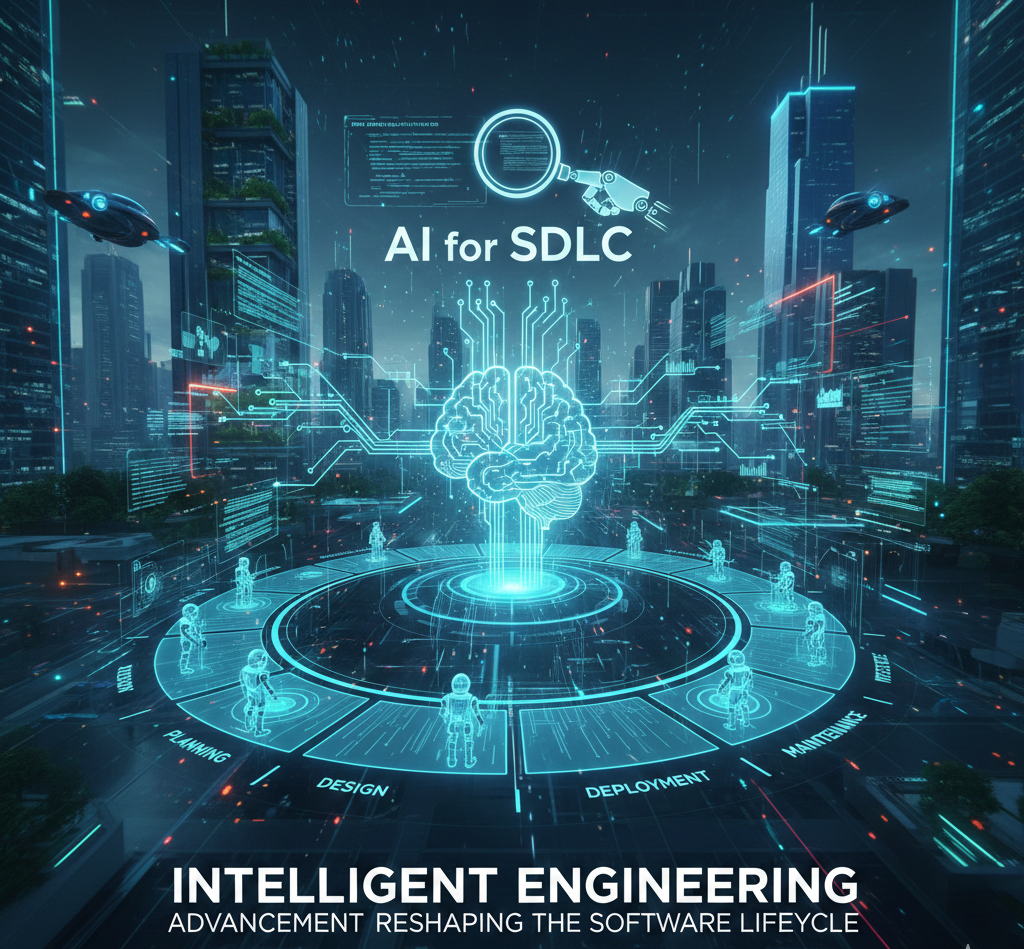
Organizations across industries are now exploring the value of ai for sdlc, recognizing that AI-powered processes create a more intelligent, efficient, and scalable development environment. This article explores how AI is transforming each stage of the SDLC, the operational value it brings, and why adopting intelligent automation is becoming a strategic imperative for modern enterprises.
The Evolution of AI in the Software Development Journey
Artificial intelligence is no longer limited to data science or analytics-driven roles. In software engineering, AI has emerged as a powerful enabler of smarter decision-making, predictive insights, and automated workflows. It empowers development teams by reducing manual workload, uncovering hidden patterns in code, and helping teams deliver high-performing applications faster.
AI improves consistency across the SDLC and ensures that quality standards are met early and continuously. Rather than reacting to issues at the final stages, teams can proactively address problems before they escalate, ultimately improving system stability and reducing delivery risks.
Subheading Featuring the Target Keyword
Reimagining the Development Lifecycle Through the Power of ai for sdlc
Understanding the impact of ai for sdlc is essential for organizations seeking transformation at every development stage. AI brings intelligence to requirement analysis, coding, testing, deployment, and maintenance. It analyzes vast data sets, identifies anomalies, and offers suggestions that developers and testers may overlook during manual processes.
The advantage lies in AI’s ability to learn from historical project patterns, user behavior, and system performance. By integrating these insights into the development workflow, teams gain stronger predictability, fewer defects, and more efficient project execution. The result is a cohesive and automated lifecycle where complexities are simplified and quality is significantly enhanced.
Strengthening Requirements and Early-Stage Planning
One of the most challenging aspects of software delivery is ensuring clear, accurate, and actionable requirements. Misinterpretations in early stages often lead to project delays, increased costs, and scope creep. AI helps bridge this gap by analyzing documents, extracting key insights, and detecting inconsistencies or missing elements.
AI-powered requirement tools can examine historical data to predict potential risks or bottlenecks. This improves planning accuracy and ensures teams begin development with greater clarity and alignment. The ability to automate requirement validation also reduces the chance of human error and supports more structured decision-making.
AI-Enhanced Coding and Development Acceleration
AI’s influence is particularly evident in the coding phase, where intelligent development environments assist engineers in writing better code. Tools designed around ai for sdlc offer real-time recommendations, suggest optimizations, and automatically correct formatting or structural issues.
Developers can generate code from natural language inputs, streamline repetitive tasks, and ensure adherence to best practices. AI-driven code review systems also analyze patterns across large repositories, identifying vulnerabilities and suggesting improvements. These benefits accelerate development cycles and significantly improve code quality, especially in large-scale engineering environments.
Intelligent Testing for Faster and Higher-Quality Releases
Testing plays a critical role in ensuring product quality, and AI is redefining how organizations approach this crucial phase. AI-powered testing engines can automatically generate test cases, identify coverage gaps, and prioritize scenarios based on risk. This creates a more thorough and efficient testing process.
Machine learning algorithms evaluate application behavior, compare previous test results, and detect anomalies, enabling QA teams to find defects sooner and prevent issues from reaching production. The use of ai for sdlc in this stage leads to faster releases, fewer bugs, and a more satisfying end-user experience.
AI-Guided Deployment and System Monitoring
Seamless deployment and reliable operations are fundamental to successful product delivery. AI enables predictive monitoring, automated release orchestration, and intelligent resource optimization. It can analyze system performance in real time, anticipate failures, and trigger corrective actions without manual intervention.
AI-driven monitoring tools help maintain system uptime and ensure optimal user experiences. They observe traffic patterns, workload fluctuations, and application behavior, adjusting resources as needed. This reduces downtime risks and enhances the stability of production environments.
Enhancing Collaboration and Documentation Quality
Modern software development involves cross-functional collaboration between stakeholders, engineers, testers, designers, and DevOps teams. AI improves collaboration by automating documentation, summarizing discussions, and providing real-time project insights. It helps teams maintain consistent communication and ensures that all project elements remain aligned.
By generating accurate documentation throughout the lifecycle, AI helps reduce ambiguity and maintains a reliable source of truth for future development and maintenance.
Driving Innovation and Long-Term Engineering Value
Beyond automation, the strategic role of ai for sdlc lies in its ability to support long-term innovation. AI enables businesses to experiment with new features quickly, deliver continuous improvements, and adapt to evolving customer needs. Organizations gain the agility to innovate regularly without compromising performance or security.
AI insights also guide product enhancements by analyzing user behavior, system performance, and feedback patterns. This continuous intelligence empowers businesses to make informed decisions and position their products competitively in the market.
Conclusion
AI is transforming software engineering into a smarter, faster, and more predictive discipline. The growing adoption of ai for sdlc demonstrates the shift toward intelligent automation across the entire development lifecycle. From planning to deployment and long-term operations, AI enhances quality, reduces risks, and accelerates delivery timelines.
Organizations that embrace AI-driven development gain not only productivity advantages but also the flexibility needed to adapt in a rapidly evolving digital landscape. As AI continues to advance, its role in the SDLC will only deepen, creating new opportunities for innovation, optimization, and exceptional software outcomes.